How to File ITR-2 Online with Capital Gains (AY 2026-27): Step-by-Step E-Filing Guide for Stock & Mutual Fund Investors
How to File ITR-2 Online with Capital Gains (AY 2026-27): Step-by-Step E-Filing Guide for Stock & Mutual Fund Investors
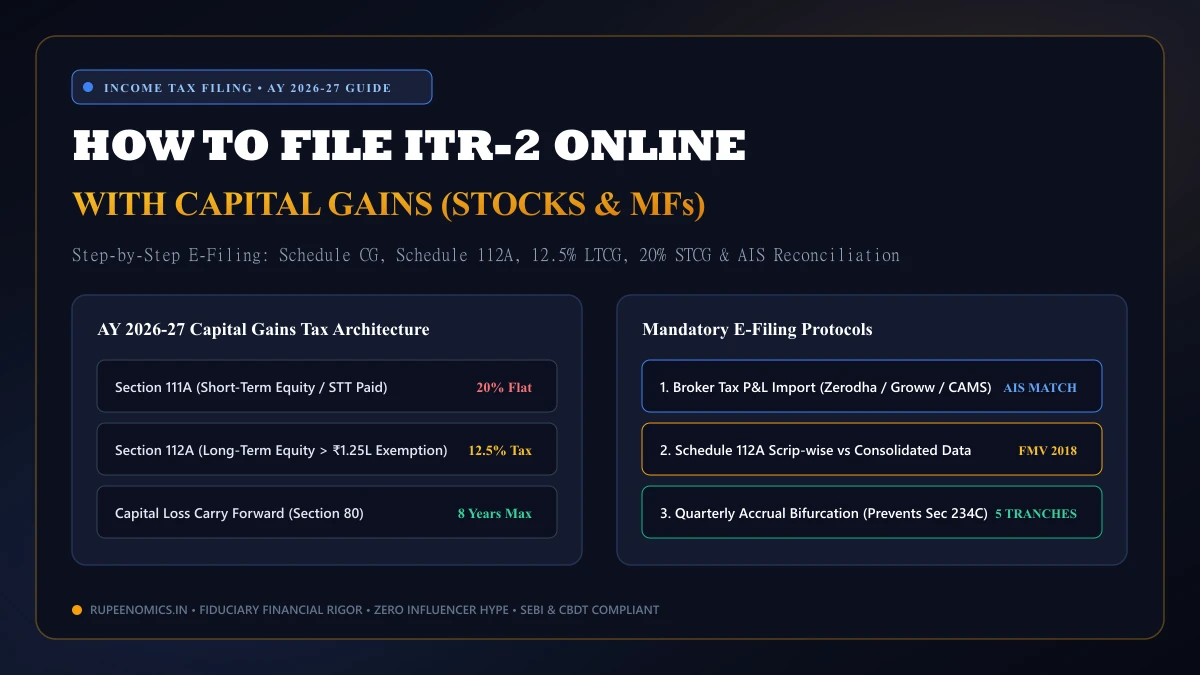
Position-0 Quick Verdict: If you are a salaried individual who sold even a single share of stock or redeemed mutual fund units in FY 2025-26, you cannot file ITR-1 (Sahaj). You are legally required to file ITR-2. For Assessment Year (AY) 2026-27, equity capital gains are taxed under the revised framework: Short-Term Capital Gains (STCG) at 20% under Section 111A and Long-Term Capital Gains (LTCG) at 12.5% above the ₹1.25 Lakh annual exemption limit under Section 112A. Filing requires downloading your broker's Capital Gains Tax P&L, reconciling it against your Annual Information Statement (AIS/TIS), filling Schedule CG and Schedule 112A, bifurcating gains across 5 calendar quarters to prevent Section 234C interest penalties, and completing Aadhaar OTP e-verification.
The Defective Return Warning: Filing ITR-1 when you have realized capital gains is treated as a defective return under Section 139(9). The Income Tax Department’s automated processing system (CPC Bengaluru) cross-references CDSL/NSDL depository transactions directly from your PAN. If you omit capital gains from your tax return, you will receive an automated demand notice under Section 143(1)(a) accompanied by penal interest under Sections 234A, 234B, and 234C.
1. Statutory Eligibility: Who Must File ITR-2?
ITR-2 is the mandatory return form for individuals and Hindu Undivided Families (HUFs) who earn income from salaries, house properties, or capital gains, but do not have profits and gains from business or profession (PGBP).
┌────────────────────────────────────────────────────────────────────────────────────────┐
│                               ITR-1 VS ITR-2 DECISION MATRIX                           │
├─────────────────────────────────────────┬──────────────────────┬───────────────────────┤
│ Income / Asset Profile                  │ Eligible for ITR-1?  │ Mandatory Return Form │
├─────────────────────────────────────────┼──────────────────────┼───────────────────────┤
│ Salary + 1 House Property + FD Interest │ ✅ YES (if ≤ ₹50L)   │ ITR-1 (Sahaj)         │
├─────────────────────────────────────────┼──────────────────────┼───────────────────────┤
│ Salary + Sold Equity Shares (STCG/LTCG) │ ❌ NO (Disqualified) │ **ITR-2**             │
├─────────────────────────────────────────┼──────────────────────┼───────────────────────┤
│ Salary + Redeemed Mutual Fund Units     │ ❌ NO (Disqualified) │ **ITR-2**             │
├─────────────────────────────────────────┼──────────────────────┼───────────────────────┤
│ Real Estate / Land Capital Gains        │ ❌ NO (Disqualified) │ **ITR-2**             │
├─────────────────────────────────────────┼──────────────────────┼───────────────────────┤
│ Holds Unlisted Company Shares or ESOPs  │ ❌ NO (Disqualified) │ **ITR-2**             │
├─────────────────────────────────────────┼──────────────────────┼───────────────────────┤
│ Director in an Indian or Foreign Co.    │ ❌ NO (Disqualified) │ **ITR-2**             │
├─────────────────────────────────────────┼──────────────────────┼───────────────────────┤
│ Foreign Assets / Foreign Bank Accounts  │ ❌ NO (Disqualified) │ **ITR-2**             │
├─────────────────────────────────────────┼──────────────────────┼───────────────────────┤
│ Total Income Exceeds ₹50 Lakhs          │ ❌ NO (Disqualified) │ **ITR-2**             │
├─────────────────────────────────────────┼──────────────────────┼───────────────────────┤
│ F&O / Intraday Trading Turnover         │ ❌ NO (Business Inc) │ **ITR-3**             │
└─────────────────────────────────────────┴──────────────────────┴───────────────────────┘
Note on Futures & Options (F&O): If you engaged in derivatives trading (Nifty/Bank Nifty options or futures) or intraday equity trading, the Income Tax Act classifies this as Non-Speculative Business Income and Speculative Business Income respectively. You cannot file ITR-2; you must file ITR-3.
2. Revised Capital Gains Tax Architecture (AY 2026-27 / FY 2025-26)
Before filling Schedule CG, understand the statutory tax rates applicable for AY 2026-27:
┌────────────────────────────────────────────────────────────────────────────────────────┐
│                    CAPITAL GAINS TAX RATES FOR ASSESSMENT YEAR 2026-27                 │
├───────────────────────┬─────────────────────────┬──────────────┬───────────────────────┤
│ Asset Class           │ Holding Period for Long │ Short-Term   │ Long-Term Capital     │
│                       │ Term Classification     │ Tax Rate     │ Gains Tax Rate        │
├───────────────────────┼─────────────────────────┼──────────────┼───────────────────────┤
│ Listed Equity Shares  │ More than 12 Months     │ **20%**      │ **12.5%** on gains    │
│ & Equity Mutual Funds │                         │ (Sec 111A)   │ exceeding ₹1.25 Lakh  │
│ (STT Paid)            │                         │              │ (Section 112A)        │
├───────────────────────┼─────────────────────────┼──────────────┼───────────────────────┤
│ Debt Mutual Funds     │ Any Holding Period      │ Slab Rates   │ Slab Rates (Treated   │
│ (Purchased post Apr 23)│ (No LTCG benefit)      │ (Sec 50AA)   │ as Short-Term always) │
├───────────────────────┼─────────────────────────┼──────────────┼───────────────────────┤
│ Unlisted Equity &     │ More than 24 Months     │ Slab Rates   │ **12.5%**             │
│ Private ESOPs         │                         │              │ (Section 112)         │
├───────────────────────┼─────────────────────────┼──────────────┼───────────────────────┤
│ Real Estate / Immovable│ More than 24 Months    │ Slab Rates   │ **12.5%** (Without    │
│ Property (Land/Flat)  │                         │              │ indexation)           │
├───────────────────────┼─────────────────────────┼──────────────┼───────────────────────┤
│ Physical Gold, SGB &  │ More than 24 Months     │ Slab Rates   │ **12.5%**             │
│ Gold ETFs             │                         │              │ (Section 112)         │
└───────────────────────┴─────────────────────────┴──────────────┴───────────────────────┘
Key Changes to Remember:
- The ₹1.25 Lakh Exemption: Under Section 112A, the aggregate annual exemption for Long-Term Capital Gains on listed equities and equity-oriented mutual funds is ₹1,25,000 (raised from the earlier ₹1,00,000 threshold).
- STCG Rate Hike to 20%: Short-term equity capital gains under Section 111A are taxed at a flat 20% (plus 4% health & education cess = 20.8%).
- No Indexation Benefit for Post-2024 Assets: Indexation benefits on long-term capital assets (real estate, gold, unlisted shares) have been removed, standardizing the long-term tax rate at a uniform 12.5%.
3. Pre-Filing Document Checklist: Gather Before You Begin
Enjoyed this post?
Get our weekly digest delivered free.
Do not log into the income tax portal without having these 5 documents open on your desktop:
- Form 16 (Part A & Part B): Issued by your employer detailing total salary paid, standard deduction (₹75,000 under New Regime or ₹50,000 under Old Regime), and TDS deducted under Section 192.
- Annual Information Statement (AIS) & Taxpayer Information Summary (TIS): Downloaded as a PDF/JSON directly from the e-Filing portal (
Services→Annual Information Statement). Contains data reported by depositories (CDSL/NSDL), mutual fund RTAs (CAMS/KFintech), and banks. - Consolidated Capital Gains Statement from Broker(s):
- Zerodha: Console → Reports → Tax P&L → Select FY 2025-26 → Download Tradewise Tax P&L (Excel).
- Groww: Reports → Tax P&L Report for FY 2025-26.
- Upstox / Angel One / ICICI Direct: Download the standard capital gains tax filing report.
- Mutual Funds: CAMS or KFintech consolidated capital gains statement (CAS).
- Form 26AS: Tax credit statement showing TDS deducted on salary, bank interest (Section 194A), and sale of immovable property (Section 194-IA).
- Bank Account Statements & Interest Certificates: Savings account interest across all operational bank accounts (reported under Schedule OS).
4. Step-by-Step E-Filing Walkthrough for ITR-2
Step 1: Portal Login & Selecting Return Details
- Go to
https://eportal.incometax.gov.inand log in using your PAN (User ID) and password. - Click on e-File → Income Tax Returns → File Income Tax Return.
- Select Assessment Year: Choose AY 2026-27 (Current AY).
- Select Status: Choose Individual → Click Continue.
- Select ITR Form: Choose ITR-2 → Click Proceed with ITR-2.
Step 2: Selecting the Mandatory Schedules
ITR-2 contains over 30 schedules. To avoid cognitive overload, you only need to select the schedules applicable to your personal tax profile:
┌────────────────────────────────────────────────────────────────────────────────────────┐
│                        MANDATORY SCHEDULES CHECKLIST FOR ITR-2                         │
├───────────────────────┬───────────────────────────────┬────────────────────────────────┤
│ Category              │ Schedule Name                 │ Purpose                        │
├───────────────────────┼───────────────────────────────┼────────────────────────────────┤
│ **General**           │ Part A - GEN                  │ Personal information, filing   │
│                       │                               │ section (139(1)), bank details │
├───────────────────────┼───────────────────────────────┼────────────────────────────────┤
│ **Income**            │ **Schedule S (Salary)**       │ Salary, allowances, standard   │
│                       │                               │ deduction ₹75,000              │
│                       │ **Schedule HP (House Prop)**  │ Home loan interest / rental    │
│                       │ **Schedule CG (Capital Gains)│ STCG & LTCG master calculations│
│                       │ **Schedule 112A**             │ Scrip-wise / aggregated equity │
│                       │ **Schedule 115AD(1)(b)(iii)** │ Mutual fund LTCG details       │
│                       │ **Schedule OS (Other Sources)│ Savings interest, dividends    │
├───────────────────────┼───────────────────────────────┼────────────────────────────────┤
│ **Losses & Set-Off**  │ **Schedule CYLA**             │ Current Year Loss Adjustment   │
│                       │ **Schedule BFLA**             │ Brought Forward Loss Adjustment│
│                       │ **Schedule CFL**              │ Carry Forward Loss Register    │
├───────────────────────┼───────────────────────────────┼────────────────────────────────┤
│ **Deductions**        │ **Schedule VIA**              │ 80C, 80D, 80CCD(2) (Old/New)   │
├───────────────────────┼───────────────────────────────┼────────────────────────────────┤
│ **Tax Computation**   │ **Part B - TI & Part B - TTI**│ Total Income & Tax Payable     │
└───────────────────────┴───────────────────────────────┴────────────────────────────────┘
Step 3: Reconciling Salary Income (Schedule S)
- Open Schedule S (Salary).
- The portal will pre-fill your Gross Salary from Form 16 / AIS.
- Verify that:
- Gross Salary under Section 17(1) matches Box 1(d) of Part B of your Form 16.
- Under the New Tax Regime, the Standard Deduction of ₹75,000 is automatically deducted under Section 16(ia).
- Professional Tax paid (up to ₹2,500 under Section 16(iii)) is claimed if you choose the Old Tax Regime.
- Click Confirm to lock in Schedule S.
Step 4: Mastering Schedule CG (Capital Gains)
Click on Schedule Capital Gains (CG). The portal will ask you to check the types of capital assets you sold during the financial year:
- ✅ Equity share or unit of an equity-oriented mutual fund (STT paid)
- ✅ Mutual fund units other than equity-oriented units (Debt MFs / Liquid MFs)
- ✅ Immovable property (Land, building, or residential flat) [if applicable]
Part A: Reporting Short-Term Capital Gains (STCG)
- Navigate to Short Term Capital Gain (STCG) → Section 111A (Equity shares/units where STT is paid).
- Enter the aggregate figures directly from your Zerodha/Groww Capital Gains report:
- Full Value of Consideration (Total Sale Value): Total gross revenue from shares/equity MFs sold within 12 months.
- Cost of Acquisition (Total Buy Price): Actual purchase value of the sold securities.
- Expenditure Incurred Wholly & Exclusively in Connection with Transfer: Brokerage, exchange transaction charges, and turnover fees (Note: STT is strictly not deductible as an expense under Section 111A/112A).
- The portal automatically computes your net STCG taxed at 20%.
Part B: Reporting Long-Term Capital Gains (LTCG - Section 112A)
For listed shares and equity mutual funds held for more than 12 months:
- Navigate to Long Term Capital Gain (LTCG) → Section 112A.
- You will be prompted to enter data either manually or by importing Schedule 112A.
Step 5: How to Fill Schedule 112A (Scrip-Wise vs Aggregated)
Homeowners and retail traders frequently panic over whether they must manually type every single stock trade into Schedule 112A.
┌────────────────────────────────────────────────────────────────────────────────────────┐
│                   THE SCHEDULE 112A REPORTING PROTOCOL (AY 2026-27)                    │
├───────────────────────────────────────┬────────────────────────────────────────────────┤
│ Transaction Type                      │ Mandatory Reporting Requirement                │
├───────────────────────────────────────┼────────────────────────────────────────────────┤
│ Shares Bought **AFTER Jan 31, 2018**  │ **Consolidated Aggregated Entry Allowed**       │
│ (No Grandfathering Clause Claimed)    │ Enter total Sale Value, total Cost of          │
│                                       │ Acquisition & Expenses in a single summary row │
├───────────────────────────────────────┼────────────────────────────────────────────────┤
│ Shares Bought **ON OR BEFORE Jan 31,  │ **Scrip-Wise Reporting Mandatory**             │
│ 2018** (Claiming Grandfathering FMV)  │ Must enter ISIN Code, Share Name, Number of    │
│                                       │ Shares, Sale Price, Cost & Jan 31 2018 FMV     │
└───────────────────────────────────────┴────────────────────────────────────────────────┘
If You Bought Shares After Jan 31, 2018:
Most retail investors today bought shares after 2018. In this scenario, you do not need to enter each scrip individually. You can enter the single aggregate total:
- Full Value of Consideration: ₹Total Sale Proceeds
- Cost of Acquisition: ₹Total Buy Value
- Balance LTCG: The system automatically calculates your gain, subtracts the ₹1,25,000 statutory exemption, and applies the 12.5% tax rate to the remainder.
If Claiming Grandfathering under Section 55(2)(ac):
For legacy shares held since prior to January 31, 2018:
- Enter the specific ISIN Code (e.g.
INE002A01018for Reliance). - Enter the Fair Market Value (FMV) per share as of January 31, 2018 (highest trading price on stock exchanges on that date).
- The portal automatically applies the statutory grandfathering formula: $$\text{Cost of Acquisition} = \max(\text{Actual Buy Price}, \min(\text{FMV as of 31-Jan-2018}, \text{Sale Price}))$$
Step 6: Quarterly Bifurcation of Capital Gains (Preventing Section 234C Penalties)
This is the #1 trap where DIY tax filers lose money. Advance tax on capital gains is only payable after the gain is actually realized.
At the bottom of Schedule CG, you will find a table titled:
"Information about accrual/receipt of capital gain"
You must break down your net capital gains into the 5 calendar quarters:
┌────────────────────────────────────────────────────────────────────────────────────────┐
│                      QUARTERLY ADVANCE TAX BIFURCATION SCHEDULE                        │
├───────────────────────┬─────────────────────────────────┬──────────────────────────────┤
│ Tranche               │ Date Period                     │ Where to Find Number         │
├───────────────────────┼─────────────────────────────────┼──────────────────────────────┤
│ Tranche 1 (Upto 15%)  │ Up to 15th June                 │ Broker Tax P&L Q1 Summary    │
├───────────────────────┼─────────────────────────────────┼──────────────────────────────┤
│ Tranche 2 (Upto 45%)  │ 16th June to 15th September     │ Broker Tax P&L Q2 Summary    │
├───────────────────────┼─────────────────────────────────┼──────────────────────────────┤
│ Tranche 3 (Upto 75%)  │ 16th September to 15th December │ Broker Tax P&L Q3 Summary    │
├───────────────────────┼─────────────────────────────────┼──────────────────────────────┤
│ Tranche 4 (Upto 100%) │ 16th December to 15th March     │ Broker Tax P&L Q4 Summary    │
├───────────────────────┼─────────────────────────────────┼──────────────────────────────┤
│ Tranche 5             │ 16th March to 31st March        │ Final 15-day closing trades  │
└───────────────────────┴─────────────────────────────────┴──────────────────────────────┘
Why This Matters: If you made a ₹3,00,000 capital gain in February 2026, but leave the quarterly table blank or dump the entire sum into Tranche 1 (April–June), the income tax software will assume you were liable to pay advance tax back in June 2025! It will levy a 1% per month penalty under Section 234C. Always copy the exact quarterly breakdown from your Zerodha/Groww Tax P&L statement.
Step 7: Capital Loss Set-Off & Carry Forward (Schedule CYLA & CFL)
If you incurred losses in the stock market during FY 2025-26, filing ITR-2 is critical to save taxes in future years:
┌────────────────────────────────────────────────────────────────────────────────────────┐
│                        CAPITAL LOSS SET-OFF RULES (INCOME TAX ACT)                     │
├───────────────────────┬───────────────────────────────┬────────────────────────────────┤
│ Nature of Loss        │ Can Be Set Off Against        │ Cannot Be Set Off Against      │
├───────────────────────┼───────────────────────────────┼────────────────────────────────┤
│ **Short-Term Capital  │ Both **Short-Term Gains** AND │ Salary, Business Income, House │
│ Loss (STCL)**         │ **Long-Term Gains**           │ Property, or Bank Interest     │
├───────────────────────┼───────────────────────────────┼────────────────────────────────┤
│ **Long-Term Capital   │ Strictly **Long-Term Gains**  │ Short-Term Gains, Salary,      │
│ Loss (LTCL)**         │ ONLY                          │ or any other income head       │
└───────────────────────┴───────────────────────────────┴────────────────────────────────┘
- Carry Forward for 8 Years: Any unabsorbed capital loss (both STCL and LTCL) can be carried forward for 8 consecutive assessment years to offset future stock market profits under Schedule CFL.
- The Mandatory July 31 Deadline Rule: Under Section 80, you cannot carry forward capital losses if you file your return after the statutory due date (July 31). To preserve your tax shields, you must file on or before July 31!
Step 8: Reporting Dividends & Savings Interest (Schedule OS)
- Open Schedule OS (Income from Other Sources).
- Dividend Income: Enter total gross dividends received from Indian companies (pre-filled from AIS). Dividends are taxed at normal slab rates.
- Savings Bank Interest: Enter total interest received across all savings bank accounts.
- If choosing the Old Tax Regime, claim up to ₹10,000 deduction under Section 80TTA (or ₹50,000 under Section 80TTB for senior citizens).
- Under the New Tax Regime, Section 80TTA is not available.
Step 9: Final Tax Computation & Aadhaar OTP E-Verification
- Review Part B - TI (Computation of Total Income) and Part B - TTI (Computation of Tax Liability on Total Income).
- Verify that tax on STCG (20%) and LTCG (12.5% on gains > ₹1.25L) is calculated correctly alongside your salary income tax.
- If tax is payable, click Pay Now to generate a Challan (CRN) via Net Banking or UPI. Paste the BSR code and Challan number into the tax payment schedule.
- Click Preview and Submit Return.
- E-Verify Immediately: Select I would like to e-Verify now → Choose Aadhaar OTP → Enter the 6-digit OTP received on your mobile.
- Download the generated ITR-V Acknowledgement and keep it for your financial records.
5. Top 5 Mistakes That Trigger Income Tax Scrutiny Notices
- Filing ITR-1 Instead of ITR-2: Automated notice under Section 139(9) declaring your return defective.
- Omitting Dividend Income: AIS tracks every dividend credit from ₹5 onwards. Omitting dividends leads to an automated mismatch notice under Section 143(1)(a).
- Ignoring Blank Quarterly Accrual: Leaving the accrual table empty triggers artificial penal interest under Section 234C.
- Failing to Reconcile AIS Before Filing: If your broker statement shows ₹85,000 profit but AIS reports ₹95,000 (e.g. from off-market transfers or bonus fractional entitlements), resolve the discrepancy or file feedback on AIS before submission.
- Missing the July 31 Deadline with Losses: Late filing permanently destroys your right to carry forward capital losses to offset future gains.
6. Frequently Asked Questions (FAQ)
Q1. Can I file ITR-1 if my capital gains are less than the ₹1.25 Lakh exemption limit?
No. Even if your total Long-Term Capital Gains are only ₹10,000 (well below the ₹1.25 Lakh tax-free threshold), you cannot file ITR-1. The statutory format of ITR-1 Sahaj does not possess any schedule to declare capital transactions. You must file ITR-2 to claim the Section 112A exemption legally.
Q2. Is scrip-wise reporting mandatory for all share sales in ITR-2?
No. Scrip-wise reporting (entering ISIN, company name, purchase date, and historical price) is only mandatory if you are claiming grandfathering benefits under Section 55(2)(ac) for shares purchased on or before January 31, 2018. For all shares purchased after January 31, 2018, you can report consolidated totals (total sale value and total purchase cost).
Q3. Can short-term capital loss from stocks be set off against my salary income?
No. The Income Tax Act strictly prohibits inter-head set-off of capital losses against Salary income, House Property, or Business Income. Short-Term Capital Loss (STCL) can only be set off against Short-Term Capital Gains (STCG) or Long-Term Capital Gains (LTCG).
Q4. How do I get my Capital Gains statement from Zerodha and Groww?
- In Zerodha: Open Console → Click on Reports → Select Tax P&L → Choose FY 2025-26 → Download the Excel/PDF sheet.
- In Groww: Click on your Profile → Select Reports → Click Download Tax P&L for FY 2025-26. Both reports automatically categorize trades into Section 111A (STCG) and Section 112A (LTCG).
Q5. What happens if I forget to e-verify my ITR-2 within 30 days?
Under current Income Tax rules, if you do not e-verify your return within 30 days of filing, your ITR is treated as invalid and never filed. You will face late filing penalties under Section 234F (up to ₹5,000), lose all interest on tax refunds, and forfeit the right to carry forward capital losses.
The insights, broker reviews, tax estimates, and financial data presented on RupeeNomics are strictly for educational and research purposes only. RupeeNomics and its authors are not SEBI-registered investment advisors or research analysts. Nothing published herein should be construed as personalized investment advice or a recommendation to buy or sell securities. Investments in the securities market are subject to market risks. Please conduct your own due diligence or consult a SEBI-registered financial planner before making investment decisions. Read our Editorial Policy.
Enjoyed this post?
Get our weekly digest delivered free.
Share this post:
RupeeNomics is reader-supported. We may earn a commission from links in this article at no extra cost to you. Read our disclosure.
Related Posts
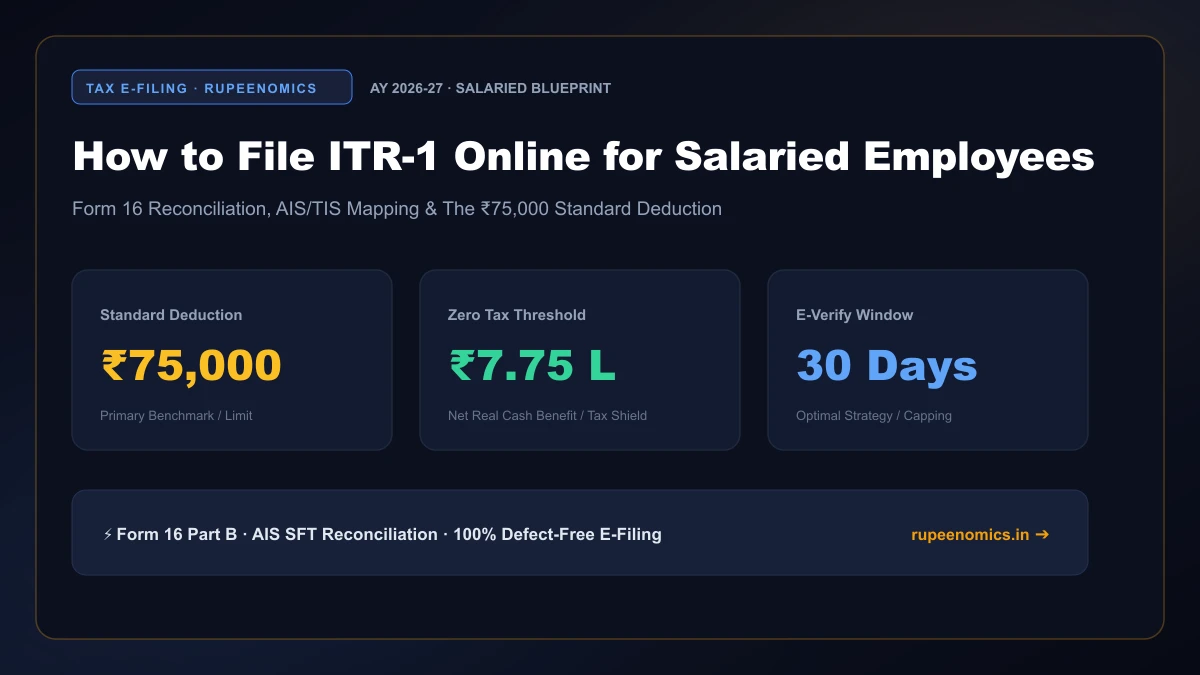
How to File ITR-1 Online for Salaried Employees (AY 2026-27): The Step-by-Step E-Filing Master Guide
How to File ITR-1 Online for Salaried Employees (AY 2026-27): The Step-by-Step E-Filing Master Guide For Indian salaried professionals, filing your Income Tax Return (ITR) is often treated as a franti…
How to File ITR Online India 2026: Step-by-Step Guide for Salaried Employees
How to File ITR Online India 2026: Step-by-Step Guide for Salaried Employees Filing deadline: July 31, 2026 (AY 2026-27 for FY 2025-26) Most salaried employees with a single employer, no property inco…

Income Tax Filing in India (2026): Complete FAQ on ITR-1 vs ITR-2, AIS Verification, Deadlines & Defective Notices
Income Tax Filing in India (2026): Complete FAQ on ITR-1 vs ITR-2, AIS Verification, Deadlines & Defective Notices Quick Summary: Filing your Income Tax Return (ITR) in India requires selecting the…