Home Loan Prepayment vs Mutual Fund SIP Master FAQ: Mathematical Breakeven, Tax Drag & 20-Year Compounding Comparison

Home Loan Prepayment vs Mutual Fund SIP Master FAQ: Mathematical Breakeven, Tax Drag & 20-Year Compounding Comparison
Quick Summary: Indian home buyers facing 8.5%–9.0% home loan interest rates frequently debate whether surplus monthly cash should be used to prepay their mortgage or invested into equity mutual funds via SIPs. Mathematically, because Direct Equity Mutual Funds have historically generated 13%–14% CAGR over 15–20 year rolling periods, investing surplus cash delivers ₹45 Lakh to ₹95 Lakh more in net terminal wealth than aggressive loan prepayment. However, executing a Hybrid Strategy (1 Extra EMI per Year + Equity SIP) offers the perfect synthesis of interest reduction and wealth compounding.
+---------------------------------------------------------------------------------------------------+
|                        HOME LOAN PREPAYMENT VS EQUITY SIP WEALTH ENGINE                           |
+---------------------------------------------------------------------------------------------------+
                                                  │
         ┌────────────────────────────────────────┼────────────────────────────────────────┐
         ▼                                        ▼                                        ▼
+──────────────────────────+             +──────────────────────────+             +──────────────────────────+
| AGGRESSIVE PREPAYMENT    |             | EQUITY SIP WEALTH ACCRET.|             | THE HYBRID 1-EXTRA EMI   |
| • 8.5% Guaranteed Return |             | • 13.0% Long-Term CAGR   |             | • Prepay 1 Extra EMI/Yr  |
| • Eliminates ₹35L Interest|            | • Net Alpha: +4.5% / Year|             | • Cuts 20Y Loan to 12 Yrs|
| • Psychological Peace    |             | • Builds Massive Corpus  |             | • Rest Invested in SIP   |
+──────────────────────────+             +──────────────────────────+             +──────────────────────────+
         │                                        │                                        │
         └────────────────────────────────────────┼────────────────────────────────────────┘
                                                  ▼
+---------------------------------------------------------------------------------------------------+
| SYNTHESIS: The Hybrid 1-Extra-EMI Rule Slashes 8 Years of Loan While Generating ₹1.2 Cr in Wealth |
+---------------------------------------------------------------------------------------------------+
❓ Frequently Asked Questions (Master Mortgage vs SIP Guide)
1. What is the Mathematical Comparison Between Prepaying a Loan vs Investing in a SIP?
Consider a ₹50 Lakh home loan taken at an 8.50% interest rate for a 20-year tenure (Monthly EMI: ₹43,391):
- Total Interest Paid Over 20 Years: ₹54.14 Lakhs (Total repayment: ₹1.04 Crore).
- If You Have Surplus ₹15,000 / Month:
- Option A (Prepay Loan with ₹15k Extra): Loan closes in 10.5 years, saving ₹28.5 Lakhs in interest. Net wealth at Year 20 (investing full EMI after loan closure): ₹1.32 Crore.
- Option B (Invest ₹15k in Direct Nifty 50 Fund @ 13% CAGR): Loan runs normal 20 years. Mutual fund corpus at Year 20: ₹1.72 Crore (After paying ₹54L interest, net wealth is ₹1.72 Crore — a net gain of ₹40 Lakhs higher!).
+---------------------------------------------------------------------------------------------------+
|                           20-YEAR NET TERMINAL WEALTH COMPARISON                                  |
+---------------------------------------------------------------------------------------------------+
 [Surplus Monthly Budget: ₹15,000]
                 │
         ┌───────┴──────────────────────────────────────────────┐
         ▼                                                      ▼
 [Option A: Prepay 8.5% Home Loan]                    [Option B: Direct Nifty 50 Equity SIP @ 13%]
 • Saves ₹28.5 Lakhs in Interest                      • Loan runs normal tenure
 • Net Portfolio Wealth at Year 20: ₹1.32 Crore       • Terminal SIP Corpus at Year 20: 🏆 ₹1.72 Crore
                                                      • **Net Alpha: +₹40.0 Lakhs More Cash!** 🚀
+---------------------------------------------------------------------------------------------------+
2. How Does the "1 Extra EMI Per Year" Hack Work?
For borrowers who want to eliminate debt quickly without sacrificing their mutual fund investments:
- The Protocol: Pay just ONE additional EMI every calendar year (or increase your monthly EMI by a modest 5% each year).
- The Result: On a 20-year loan, paying 1 extra EMI annually reduces your loan tenure from 20 years down to just 12 years, cutting over ₹18 Lakhs in interest outgo with minimal monthly strain!
3. Are There Prepayment Penalties on Home Loans in India?
NO. Under binding Reserve Bank of India (RBI) regulations:
- Commercial banks and Housing Finance Companies (HFCs) are strictly prohibited from charging any prepayment penalty or foreclosure fee on floating-rate home loans sanctioned to individual borrowers.
- You can make partial prepayments of any amount (e.g., ₹10,000, ₹50,000, or ₹5,00,000) at any time through online net-banking with zero fees.
4. How Does Income Tax Deduction Affect the Prepayment Decision?
Under the Old Tax Regime, home loans offer two tax deductions:
- Section 24(b): Up to ₹2,00,000 deduction on interest paid on self-occupied properties. (For someone in the 30% slab, this saves ₹62,400 in annual tax, effectively reducing the effective net interest rate from 8.5% down to 5.95%!).
- Section 80C: Up to ₹1,50,000 deduction on principal repayment.
- (Note: Under the New Tax Regime, Section 24(b) deduction on self-occupied property is NOT allowed, making the effective interest rate the full 8.5%).
5. When Does Prepaying the Home Loan Make Psychological & Strategic Sense?
Prepayment is recommended over SIP investing if:
- You are Within 5–7 Years of Retirement: Eliminating fixed debt obligations ensures zero cash flow pressure in retirement.
- You Suffer from High Debt Anxiety: The psychological relief of living in a 100% debt-free home often outweighs the mathematical spread.
- Your Loan Interest Rate Spikes Above 10.0%: If macroeconomic rate hikes push floating mortgage rates above 10%–11%, guaranteed interest savings approach expected equity returns.
📊 Summary Reference: The 3-Strategy Comparison Table
+---------------------------------------------------------------------------------------------------+
|                         HOME LOAN STRATEGY BENCHMARKING (₹50L LOAN @ 8.5%)                        |
+---------------------------------------------------------------------------------------------------+
| Metric / Parameter           | Pure Normal EMI (Baseline)         | Aggressive Prepayment Plan    | Hybrid Plan (1 Extra EMI + SIP|
+------------------------------+------------------------------------+-------------------------------+-------------------------------+
| Loan Tenure Completed        | 20.0 Years                         | 10.5 Years                    | 12.2 Years                    |
| Total Interest Paid (₹)      | ₹54.14 Lakhs                       | ₹25.64 Lakhs                  | ₹31.20 Lakhs                  |
| Monthly SIP Investment       | ₹0                                 | ₹0 (until Yr 10.5)            | ₹10,000 / Month               |
| Net Terminal Wealth at Yr 20 | ₹0                                 | ₹1.32 Crore                   | 🏆 **₹1.68 Crore**            |
| Psychological Comfort        | Low                                | Very High                     | Balanced High                 |
+---------------------------------------------------------------------------------------------------+
📌 The Bottom Line & Actionable Mortgage Rules
Enjoyed this post?
Get our weekly digest delivered free.
+---------------------------------------------------------------------------------------------------+
|                              TOPIC SLUG ALIGNED ACTIONABLE TAKEAWAYS                              |
+---------------------------------------------------------------------------------------------------+
| Topic Slug                           | Core Actionable Takeaway for Homeowners                    |
+--------------------------------------+------------------------------------------------------------+
| home-loan-prepayment-vs-sip-faq      | Equities beat mortgage interest over 15+ years.            |
| mathematical-breakeven-cagr          | Breakeven hurdle is ~9.5% equity CAGR (Nifty does ~13%).   |
| mortgage-interest-tax-deductions     | Factor in Section 24b tax rebate if under Old Tax Regime.  |
| systematic-prepayment-strategy       | Pay 1 extra EMI per year to slash 8 years off your loan.   |
| debt-free-peace-vs-wealth-maximization| Adopt the Hybrid Strategy: 50% to Prepayment, 50% to SIP.  |
+---------------------------------------------------------------------------------------------------+
📫 Subscribe to India Real Estate & Wealth Analytics
Get mortgage calculators, prepayment optimization blueprints, and portfolio compounding frameworks delivered to your inbox every week.
Subscribe to RupeeNomics Free Newsletter →
Disclosure: This FAQ is published for educational and financial literacy purposes.
The insights, broker reviews, tax estimates, and financial data presented on RupeeNomics are strictly for educational and research purposes only. RupeeNomics and its authors are not SEBI-registered investment advisors or research analysts. Nothing published herein should be construed as personalized investment advice or a recommendation to buy or sell securities. Investments in the securities market are subject to market risks. Please conduct your own due diligence or consult a SEBI-registered financial planner before making investment decisions. Read our Editorial Policy.
Enjoyed this post?
Get our weekly digest delivered free.
Share this post:
RupeeNomics is reader-supported. We may earn a commission from links in this article at no extra cost to you. Read our disclosure.
Related Posts
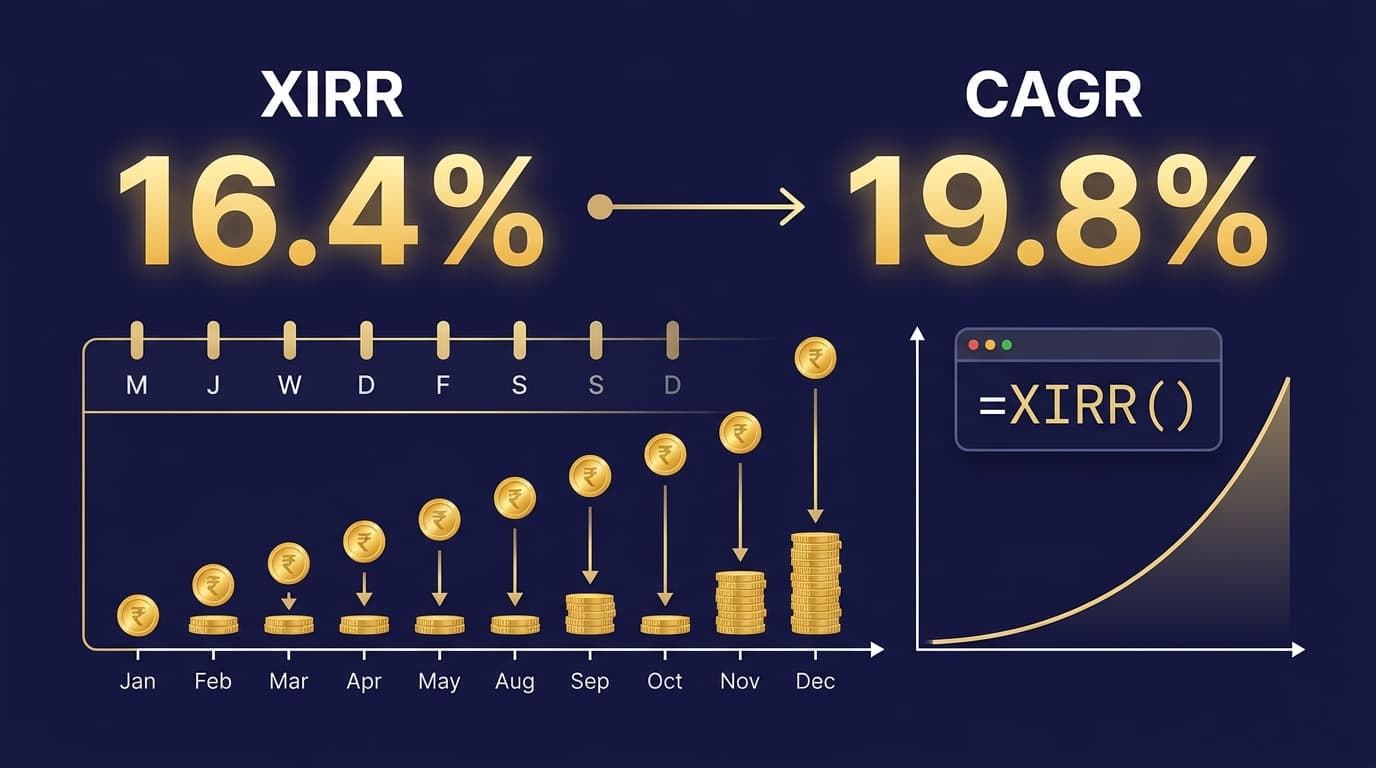
XIRR vs CAGR for SIP Returns: What's the Difference and Which to Use?
You've been doing your SIP for 3 years. The fund's page shows "CAGR: 18%". But when you check your portfolio value, the returns don't feel like 18%. You're not miscalculating — CAGR and XIRR measure f…

Asian Paints Business Model: The Distribution Moat
Asian Paints Business Model: The Distribution Moat, Supercomputers & The Tinting Machine Monopoly Quick Summary: Most investors assume Asian Paints is a chemical manufacturing company. In reality, …

HDFC Bank Business Model: The CASA & Retail Moat
HDFC Bank Business Model: The Low-Cost CASA Engine & Retail Fortress Quick Summary: In commercial banking, money is a commodity. When two banks offer the identical ₹50 lakh home loan or working cap…